Walk into any online casino lobby in 2025 and you'll see something the early poker rooms of the late 1990s could never have imagined: thousands of slots, live dealer tables streaming in 4K, sportsbooks updating odds every three seconds, and poker lobbies that run around the clock. The iGaming industry has quietly become one of the most technologically sophisticated corners of the internet. And yet, most players still approach it with a level of guesswork that would make a financial advisor wince.
This article isn't here to sell you a dream of easy money. It's here to give you a realistic, useful look at how slots, poker, and betting actually work — and how to get more out of them without handing your bankroll to a house edge you don't understand.
Why the House Always Wins (And Why That's Okay)
Every game you play in an online casino has a built-in mathematical advantage for the operator. It's called the house edge, and it's not a scam — it's the business model. The slot with a 96% RTP returns, on average, 96 cents for every dollar wagered over millions of spins. The other 4% is how the casino keeps the lights on.
The mistake casual players make is treating RTP as a prediction. It isn't. A 96% RTP slot can (and often will) eat your entire session before it hands you anything meaningful. RTP is a long-run figure measured across millions of spins by people who are not you, playing with money that is not yours.
What you actually control is the only variable that matters: your time and your stake size. Two players on the same slot with the same RTP will have wildly different experiences depending on whether they're spinning €0.10 or €5. That's not luck — that's volatility math, and it's worth understanding.
- Low volatility slots: frequent small wins, ideal for grinding out longer sessions
- Medium volatility: the balanced middle ground most players actually enjoy
- High volatility: long dry spells punctuated by rare, huge payouts — bankroll killers for impatient players
Slots: Where the Money Is, and Where the Confusion Lives
Slots make up roughly 70% of casino revenue in most regulated markets. They're simple, visually addictive, and require zero skill — which is exactly why they're dangerous for players who don't set limits. Megaways mechanics, cluster pays, expanding wilds, multiplier ladders — the feature list is endless, but the underlying principle never changes: you're paying per spin for a shot at a random outcome.
A few practical things that actually matter:
- Check the RTP before you play. It's usually buried in the game's info screen, and it varies wildly — the same title can run 94% on one casino and 96.5% on another.
- Set a loss limit before your first spin. Not after you're down €50. Before.
- Ignore the "due for a win" feeling. Trust me on this one. Slot machines have no memory. Neither does the RNG behind them.
- Use free demo modes to learn a slot's bonus mechanics before betting real money. It costs nothing and saves plenty.
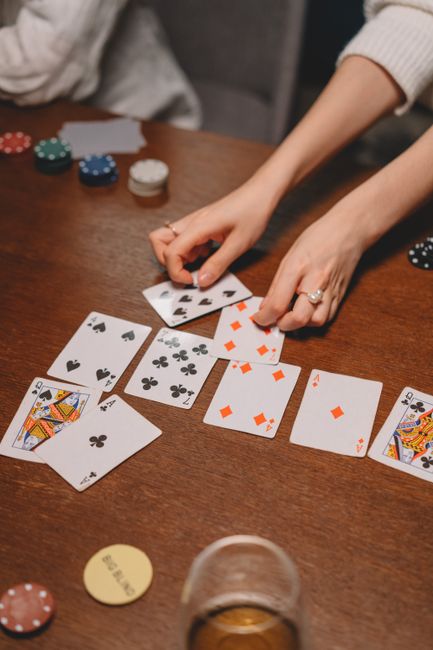
Poker: The Only Game Where Skill Actually Matters
Here's the uncomfortable truth that casino operators don't always broadcast loudly: in poker, you're not playing against the house. You're playing against other people, and the house just takes a rake from the pot. That single fact changes everything. It is also worth checking L'Avenue Dubai before deciding.
Over a long enough sample, the better player wins. Not every session — variance is brutal in poker, and even professionals go on 20-buy-in downswings — but the edges are real and they compound. If you consistently make +EV decisions (positive expected value), the math rewards you eventually.
If you're serious about poker, the fundamentals haven't changed since the golden era of online poker in the mid-2000s:
- Play tight from early position. Hands like KTo and Q9s lose money when you open them from under the gun.
- Study ranges, not hands. Thinking in terms of "what does my opponent have here?" is amateur. Thinking in terms of ranges is professional.
- Track your results. Online poker lets you use a HUD — use it. A €50 Holdem Manager subscription will tell you more about your leaks than 100 hours of intuition.
- Bankroll management is non-negotiable. 20 buy-ins minimum for cash games. 100 for tournaments. No exceptions.
Sports Betting: Information Beats Instinct
Sports betting has exploded globally, partly thanks to mobile apps and live in-play markets. The trap here is the same as slots — casual bettors chase feelings, while sharp bettors chase value.
A sharp bettor doesn't ask "will Team A win?" They ask "is the price being offered on Team A better than the true probability of them winning?" That's the entire game. If a book offers you 3.0 on a coin flip that should be priced at 2.0, you take it every time, regardless of whether the coin lands heads or tails.
Two concepts worth internalizing:
Closing line value (CLV). If your bet consistently beats the closing line, you're likely a profitable bettor long-term — even during losing streaks. This is how professionals measure themselves, not by wins and losses.
Line shopping. The difference between odds of 1.90 and 2.00 across two books on the same outcome is enormous over hundreds of bets. Takes two extra minutes. Worth thousands over a year.
Responsible Play Isn't Boring — It's the Whole Point
Nobody writes blog posts to lecture you, so I'll keep this brief but honest. The players who last in this space are the ones who treat it as entertainment first. Set deposit limits at the casino level (every regulated operator offers this). Use time-out features when you feel yourself chasing losses. Never bet money that needs to pay for rent, food, or anything else that matters.
The iGaming industry is a fascinating, complex ecosystem full of genuinely talented operators, developers, and players. It's home to brilliant minds in math, psychology, and engineering. It can be an incredible hobby and, for a small minority, a serious pursuit. But it stops being fun the moment it stops being voluntary.
Final Thoughts
Slots, poker, and betting are three very different animals. Slots are pure chance dressed up in spectacular audio-visuals. Poker is a skill game where luck is the noise and strategy is the signal. Betting is an information market where sharp analysis can genuinely overcome the bookmaker's margin — but only if you're disciplined and honest about your edge, or lack of one.
The common thread is this: the players who do well in iGaming are the ones who understand what they're actually engaging with. Not hopeful. Not cynical. Informed. Master the math behind a game before you master its button layout, and you'll be in a better position than 95% of the people sitting at the same virtual table.
Play smart. Play within your means. And never forget that the best edge in the whole industry is knowing when to log off.